Key Takeaways
- Short-cycling means your furnace turns on and off in short bursts, usually under five minutes, without fully heating your home.
- The most common causes are dirty filters, oversized units, faulty flame sensors, clogged flues or vents, low refrigerant in heat pump systems, and cracked heat exchangers.
- A dirty filter is the easiest fix and the first thing to check.
- Northern Illinois temperature swings increase the number of heating cycles each winter, which speeds up wear on igniters, sensors, and heat exchangers.
- If a carbon monoxide alarm sounds or you smell gas, leave the house and call 911 or your gas utility from outside. Don’t troubleshoot.
It’s 6 a.m. on a January morning, and you hear the furnace kick on. Two minutes later, it clicks off. Then it starts again, and again. If you’ve been wondering why your furnace keeps turning on and off, you may be dealing with short-cycling, one of the more common winter heating problems homeowners in Arlington Heights, Schaumburg, and the northwest suburbs of Chicago encounter.
A healthy furnace typically runs for about 10 to 15 minutes at a time, several times an hour, depending on the outdoor temperature and your home’s heating needs. A short-cycling furnace, however, runs for only a few minutes or less, shuts down before your home reaches the thermostat setting, and then starts the cycle all over again. This wastes energy, can leave some rooms uncomfortably cold, and puts unnecessary strain on components that aren’t designed for constant starting and stopping.
Below, we’ll explain how to recognize short-cycling, cover the six most common causes, look at why Illinois winters can make the problem worse, and walk through a few things you can safely check yourself before calling a heating technician.
Signs Your Furnace is Short-Cycling
The sound is often the first clue. Your furnace fires up, the blower runs for just a few minutes, and then everything goes quiet, only for the cycle to start again shortly afterward. If that pattern keeps repeating, your furnace may be short-cycling. Other signs to watch for include:
- The house never quite reaches the temperature on the thermostat.
- Some rooms feel warm while others stay cold.
- Your gas bill is higher than last winter, even though you haven’t changed your settings.
- The burners light, go out within seconds, and try again.
- A blinking light or error code shows on the furnace control board.
- The furnace locks itself out and stops trying altogether.
If you’re not sure, time it. Write down when the burners light and when they shut off over a couple of cycles. Consistent run times of five minutes or less on a cold day point to a problem.
6 Common Causes of Furnace Short-Cycling
Several problems can cause a furnace to turn on and off before completing a normal heating cycle. Some are simple issues you can address yourself, while others require professional diagnosis and repair. Here are six of the most common causes of furnace short-cycling:
1. A Dirty or Clogged Air Filter
This is one of the most common causes and it’s the cheapest to fix. A clogged filter chokes off airflow, so heat builds up inside the furnace faster than the blower can move it out. When the heat exchanger gets too hot, a safety device called the high-limit switch shuts the burners off. The furnace cools down, restarts, overheats again, and the cycle continues.
During the heating season, check a standard 1-inch filter every month and replace it every one to three months. Homes with pets, recent remodeling dust, or allergy concerns usually need more frequent changes.
2. An Oversized Furnace
Bigger isn’t better with furnaces. A unit that’s too large for the home heats the air near the thermostat so quickly that it satisfies the setting and shuts down before warm air reaches the far rooms. Then those rooms cool off, and it starts all over again.
We often see this when a furnace was replaced using a rule of thumb instead of a proper load calculation, or when a homeowner added insulation and new windows after the original furnace was installed. There’s no simple part to swap here. A technician may be able to reduce the effect by adjusting fan speed or thermostat settings, but the permanent fix is a correctly sized system at replacement time.
3. A Faulty or Dirty Flame Sensor
The flame sensor is a thin metal rod that confirms the burners are actually lit. Over time it collects a coating of carbon and oxidation. When that coating gets thick enough, the sensor can’t detect the flame, so the control board cuts the gas within a few seconds as a safety precaution. After several failed attempts, many furnaces lock out completely.
The telltale pattern is burners that light, stay on for a few seconds, and go out. Cleaning or replacing the sensor is a quick repair for a technician, and it’s usually part of an annual furnace tune-up.
4. A Clogged Flue or Blocked Vent
Your furnace has to vent combustion gases safely outside. If the flue or vent pipe is blocked, a pressure switch detects the problem and shuts the furnace down. This one has a strong local angle. Most high-efficiency furnaces in the northwest suburbs vent through white PVC pipes on the side of the house, and those pipes sit right where snow drifts and ice builds up. A heavy snowfall or a night of freezing drizzle can block the intake or exhaust overnight. Older homes with chimney flues can also get blocked by debris, bird nests, or deteriorating liners.
A blocked vent is also a carbon monoxide risk, so it deserves prompt attention.
5. Low Refrigerant (Heat Pump and Dual-Fuel Systems)
A gas furnace on its own doesn’t use refrigerant. But many homes in our area pair a furnace with a heat pump, known as a dual-fuel system, and the heat pump does most of the heating on milder days. When refrigerant runs low because of a leak, the heat pump’s pressure controls trip, the system short-cycles, and it may switch over to the furnace more often than it should.
Refrigerant isn’t something that gets used up. Low levels mean a leak, and the leak needs to be found and repaired, not just topped off. By law, only EPA-certified technicians can handle refrigerants, and every Midwest Comfort technician holds EPA Section 608 certification.
6. A Cracked Heat Exchanger
This is the most serious issue on the list. The heat exchanger keeps combustion gases separate from the air that circulates through your home. When it cracks, safety switches can trip and cause the furnace to shut down repeatedly. More importantly, a crack can allow carbon monoxide to escape.
Cracks usually come from age, years of overheating caused by restricted airflow, and the constant expansion and contraction of metal every time the furnace heats up and cools down. Warning signs include a yellow or flickering burner flame, soot around the furnace, an unusual smell, or a carbon monoxide alarm. If you suspect a cracked heat exchanger, turn the furnace off and call a professional.
How Illinois Temperature Swings Accelerate Furnace Wear
Chicago-area winters rarely stay consistent. A 40-degree afternoon in Palatine can give way to a single-digit night, and an Arctic blast can push temperatures below zero within hours. Those dramatic temperature swings change how hard and how often your heating system has to work.
Every heating cycle puts stress on the same critical components. Hot-surface igniters are designed to withstand only a certain number of ignitions before they wear out. Flame sensors can accumulate residue over time, while the heat exchanger repeatedly expands as it heats and contracts as it cools. Over the course of a winter, those cycles add up. A furnace that short-cycles may start two or three times as often as it should, accelerating wear and shortening the life of these components.
Freeze-thaw cycles can create problems outside the furnace, too. Snow that melts during the day can refreeze overnight, potentially blocking vent pipes or allowing ice to build up around outdoor heat pump equipment. That’s one reason we recommend scheduling a heating inspection each fall, before the first serious cold snap arrives.
Diagnostic Checklist: What to Check Before You Call
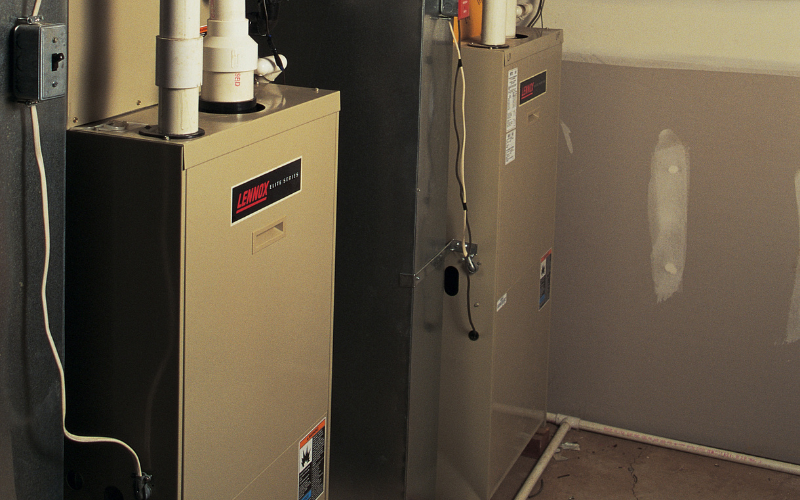
Not every short-cycling problem requires an immediate service call. Before reaching for the phone, there are a few simple and safe checks you can make yourself. These steps may reveal an easy fix, or give your technician useful information if professional service is needed.
- Check the thermostat: Confirm it’s set to heat, replace the batteries if it uses them, and make sure it isn’t near a supply vent, a sunny window, a lamp, or a drafty door.
- Inspect the air filter: If you can’t see light through it, replace it.
- Open your vents: Make sure supply registers and return grilles aren’t closed or blocked by furniture, rugs, or curtains.
- Clear the outdoor vent pipes: After a snowstorm, gently brush snow and ice away from the PVC intake and exhaust pipes by hand.
- Time a few cycles: Note how long the furnace runs and how long it rests.
- Look at the flame: If your furnace has a viewing window, a steady blue flame is normal. Yellow, orange, or flickering flames are not. Don’t remove access panels while the furnace is running.
- Write down any error code: Most furnaces have a blinking status light. The pattern tells a technician a lot.
- Test your carbon monoxide detectors: You should have at least one on every level of the home and near sleeping areas.
When to DIY and When to Call a Pro
You can safely handle a few basic checks yourself, including replacing the furnace filter, checking the thermostat settings and batteries, clearing blocked registers, and brushing snow away from outdoor vent pipes. You can also try resetting the furnace once by switching off its power for about a minute and then turning it back on.
Call a technician if the furnace continues to short-cycle after you’ve replaced the filter, the burners repeatedly light and shut off, the system goes into lockout, or a heat pump or dual-fuel system is cycling abnormally. Professional service is also recommended for furnaces more than 15 years old. Any work inside the burner compartment, including cleaning a flame sensor, should be left to a trained technician because it involves gas and electrical components.
If your carbon monoxide alarm sounds or you smell gas, do not try to investigate the problem yourself. Leave the house immediately, call 911 or your gas utility’s emergency line from outside, and then contact us.
Same-Day Furnace Repair in the Northwest Suburbs
If your furnace keeps turning on and off, don’t wait for a small heating problem to become a no-heat emergency. Whether you need a furnace short-cycling fix in Schaumburg or furnace repair in Arlington Heights, IL, Midwest Comfort Heating & Cooling can often get a technician to your home the same day.
We’re a family-owned company based in Elk Grove Village and have been serving homeowners throughout the northwest suburbs since 2012. You’ll receive a flat-rate quote before any work begins, and our 24/7 emergency service is available when heating problems can’t wait. With a 4.9-star rating from more than 300 reviews, we’re ready to help you get your furnace running safely and reliably again.
Call (847) 338-2777 for same-day furnace diagnostics in Arlington Heights, Buffalo Grove, Des Plaines, Highland Park, Hinsdale, Mount Prospect, Northbrook, Palatine, Schaumburg, and South Barrington, IL, and the surrounding areas.
Furnace Short-Cycling FAQs
How do I know if my furnace is short-cycling?
Watch and time it. If the burners regularly run for five minutes or less and shut off before your home reaches the thermostat setting, the furnace is likely short-cycling. Uneven room temperatures, rising gas bills, and burners that light and go out within seconds are other common signs.
Is short-cycling dangerous?
It can be. Often the cause is minor, like a dirty filter, but short-cycling can also point to a blocked vent or a cracked heat exchanger, both of which can lead to carbon monoxide exposure. Even when the cause is harmless, the extra starts wear out parts faster. Keep working carbon monoxide detectors in your home and have the furnace checked if the problem continues.
Can a dirty filter cause short-cycling?
Yes. It’s the most common cause. A clogged filter restricts airflow, the furnace overheats, and the high-limit switch shuts the burners off to protect the system. Replacing the filter often solves the problem within a few cycles.
How much does it cost to fix a short-cycling furnace in Illinois?
It depends entirely on the cause. A new filter costs a few dollars to around $40. Flame sensor cleaning or replacement and vent clearing are typically modest repairs, often in the low hundreds. Refrigerant leak repair on a heat pump can cost more, and a cracked heat exchanger often leads to a replacement discussion, especially on an older furnace. Midwest Comfort charges a diagnostic fee and gives you an exact flat-rate quote before starting any repair, so there are no surprises.
Should I turn off my furnace if it keeps cycling?
If a carbon monoxide alarm is sounding, you smell gas, or you see signs of a cracked heat exchanger, turn it off and leave the house. Otherwise, check the filter and thermostat first. On a freezing night, keeping some heat running can help protect your pipes, but if the furnace keeps locking out or the burners keep failing to stay lit, shut it off and call for service.
Does Midwest Comfort offer same-day furnace repair?
Yes. Most standard service requests are handled the same day, typically within a two-to-four-hour window, and emergency calls are dispatched right away, 24/7, including nights, weekends, and holidays. Call (847) 338-2777 to schedule.