When a heat wave rolls through the Chicago suburbs, the last thing you want is an air conditioner that’s running but not actually cooling your home. If you’re standing in front of a vent feeling lukewarm air, you’re not imagining it and you’re definitely not alone. This is one of the most common service calls homeowners in Arlington Heights, Buffalo Grove, Schaumburg, Mount Prospect, Elk Grove Village, and Palatine make every summer.
Before you panic about a full system replacement, it helps to understand what’s going on inside your unit. Below are the seven most common reasons an AC runs but doesn’t cool, plus a quick self-check you can do before picking up the phone.
1. Low Refrigerant
Refrigerant is the substance that absorbs heat from your indoor air and releases it outside. If your system is low on refrigerant, usually because of a leak somewhere in the coils or line set, it simply can’t move enough heat out of your home. You’ll often notice weak cooling, ice forming on the refrigerant lines, or a hissing sound near the outdoor unit. Refrigerant doesn’t get “used up” like fuel; if your system is low, something is leaking, and that leak needs to be found and sealed before more refrigerant is added.
2. Dirty Evaporator or Condenser Coils
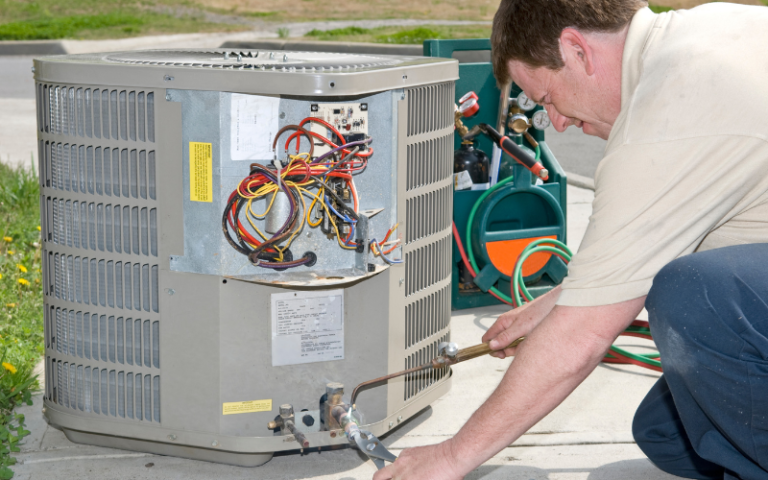
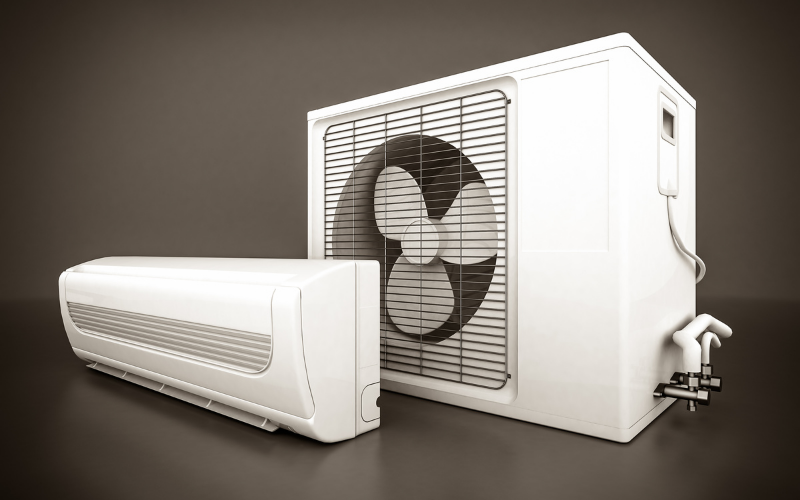
Your AC has two sets of coils: the evaporator coil indoors (which absorbs heat from your home’s air) and the condenser coil outdoors (which releases that heat outside). When either coil is coated in dust, pet hair, or grime, it can’t transfer heat efficiently. A dirty coil is like trying to cool your home through a wool blanket. This is one of the most preventable issues on this list, and it’s a big reason routine maintenance pays for itself.
3. Blocked or Restricted Condenser Unit
The outdoor condenser needs open airflow on all sides to dump heat into the outside air. Overgrown landscaping, mulch, leaves, a privacy fence built too close, or even a stack of patio furniture can choke off that airflow. When the condenser can’t breathe, the entire system’s efficiency drops, and on a 95-degree Illinois afternoon, that drop is the difference between a comfortable house and a miserable one.
4. A Failing Capacitor
Capacitors give your AC’s compressor and fan motors the jolt of energy they need to start and keep running. They’re inexpensive parts, but they take a beating from heat and electrical strain, especially during long stretches of high demand. A failing capacitor often shows up as a system that hums but won’t start, an outdoor fan that’s barely turning, or short-cycling where the unit kicks on and off rapidly. This is one of the more common reasons a “dead” AC turns out to be a quick, affordable fix.
5. Thermostat Problems
Sometimes the unit itself is fine, and the issue is the brain telling it what to do. Thermostats can lose calibration, suffer from dead batteries, or simply be set to “on” instead of “auto” (which runs the fan constantly even when no cooling is happening, making the air feel warm and stale). Smart thermostats can also lose connection to the system or have scheduling conflicts that override your settings. It’s a simple thing to check, and it costs nothing to rule out.
6. Duct Leaks
If your ductwork has gaps, disconnected sections, or holes which is common in older homes throughout the northwest suburbs, a significant portion of your cooled air can escape into the attic, basement, or crawl space before it ever reaches your living room. Homeowners with this issue often notice some rooms are cool while others stay warm, or that the system runs constantly without ever quite catching up.
7. An Undersized or Aging System
Sometimes the issue isn’t a malfunction at all, it’s a mismatch. A system that was sized for a smaller home, or one that’s simply old and has lost capacity over the years, will struggle to keep up once outdoor temperatures climb into the 90s. If your AC seems to run nonstop during heat waves but barely keeps the house at a tolerable temperature, age and sizing are worth investigating, especially if the unit is pushing 15 years or older.
Self-Check Before You Call
Before scheduling a repair, run through this quick checklist. It takes about five minutes and can save you a service call if the fix turns out to be something simple:
- Check the thermostat. Confirm it’s set to “Cool” and “Auto” (not “On”), and that the temperature is set below the current room temperature.
- Check the air filter. A clogged filter restricts airflow and can cause the evaporator coil to freeze. Replace it if it’s dirty.
- Check the outdoor unit. Look for debris, tall grass, leaves, or anything blocking airflow around the condenser. Clear at least two feet of space on all sides.
- Check your breaker panel. A tripped breaker for the AC or furnace (which houses the indoor blower) will stop the system from running properly.
- Check vents and registers. Make sure they’re open and not blocked by furniture, rugs, or curtains.
- Listen and look for ice. Hissing sounds, ice on the refrigerant lines, or water pooling near the indoor unit are signs of a refrigerant or drainage issue that needs a professional.
If you’ve gone through this list and your AC is still running but not cooling your house, it’s time to call in a technician.
When It’s Time to Call a Professional
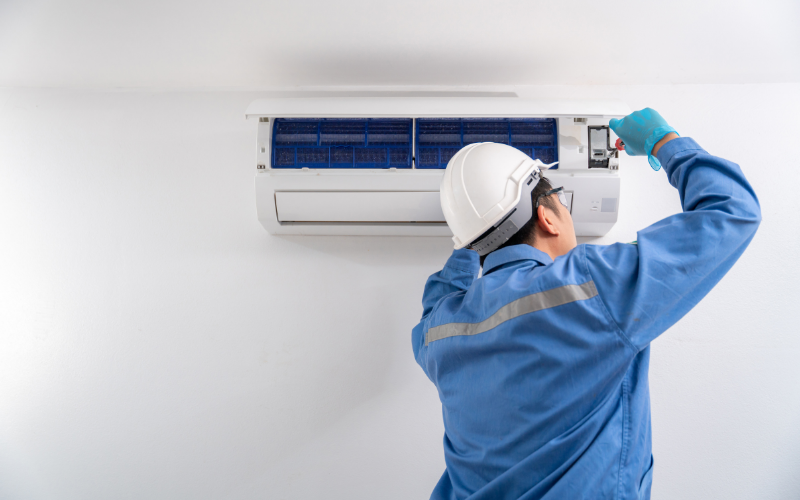
Some AC problems are safe for homeowners to troubleshoot such as a dirty filter or a thermostat setting. But refrigerant leaks, electrical components like capacitors, and sealed system issues require specialized tools, EPA-certified handling, and diagnostic equipment that go beyond a homeowner toolkit. Attempting to handle refrigerant or open electrical components yourself can be dangerous and, in many cases, illegal without certification.
It’s also worth knowing that the HVAC industry is in the middle of a major refrigerant transition. R-410A, the refrigerant used in most residential systems installed over the past two decades, is being phased down in favor of R-454B under federal regulations taking effect in 2025 and 2026. If your system uses R-410A, it can still be serviced, but refrigerant costs and availability are shifting, which makes finding and repairing leaks sooner rather than later more important than ever. A qualified technician can tell you exactly where your system stands and what your options are going forward.
Don’t Sweat It Out — Call Midwest Comfort
If your AC is running but your house isn’t cooling down, don’t wait for the next heat wave to make it worse. Midwest Comfort Heating & Cooling is a family-owned, locally trusted HVAC company serving Arlington Heights, Buffalo Grove, Schaumburg, Mount Prospect, Elk Grove Village, Palatine, and the surrounding northwest suburbs with fast, honest AC repair. Call (847) 338-2777 for same-day service.